By Theodor Ithamar
By Theodor Ithamar
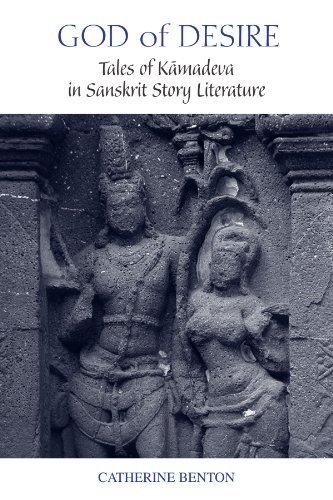
By Catherine Benton
God of hope offers Sanskrit stories of the Indian deity Kamadeva as he battles the ascetic god Siva, assists the strong goddess Devi, and incarnates because the fascinating son of Krsna. Exploring the imagery and symbolism of the god of wish in artwork and formality, Catherine Benton displays at the connection of Kamadeva to parrots, makaras (gharials), and apsarases (celestial nymphs), and to playful devotional rituals designed to win his want. as well as analyzing the Hindu literature, Benton additionally highlights Buddhist varieties of Kamadeva, the demonic Mara, who attempts to cajole the Buddha to alternate enlightenment for the delights of a girl, and the ever-youthful Manjusri, who cuts via lack of knowledge with the bodhisattva sword of knowledge. stories of Kamadeva from the Hindu and Buddhist traditions current hope as a strong strength continuously redefining the bounds of chaos and order and lightly pulling past the ephemeral trap of passionate longings.
Catherine Benton is Lecturer within the faith division at Lake wooded area College.
By Guy L. Beck
Beginning with the chanting of the Sama-Veda along the fireplace sacrifices of the traditional Indo-Aryans and with the classical Gandharva song as defined within the musicological texts of Bharata and Dattila, Beck establishes a old origin for an in-depth figuring out of the position of tune within the early Puja rituals and Indian theater, within the vernacular poetry of the Bhakti pursuits, in medieval temple worship of Siva and Vishnu in southern India, and later within the worship of Krishna within the northern Braj sector. by way of surveying a mess of worship traditions, and drawing upon assorted resources in either Sanskrit and vernacular languages, Beck unearths a continual template of interwoven ritual and song in Hindu culture that he phrases "sonic liturgy," a constitution of spiritual worship and adventure that includes sound and song on many degrees.
In constructing the concept that and strategies for realizing the phenomenon of sonic liturgy, Beck attracts from liturgical reports and formality experiences, broadening the scale of every, in addition to from contemporary paintings within the fields of Indian faith and track. As he maps the evolution of sonic liturgy in Hindu tradition, Beck exhibits how, parallel to the improvement of spiritual ritual from precedent days to the current, there's a much less understood development of musical shape, starting with Vedic chants of 2 to 3 notes to advanced genres of devotional temple track using ragas with as much as a dozen notes. Sonic liturgy in its adulthood is show up as a fancy interactive worship event of the Vaishnava sects, awarded the following in Beck's ultimate chapters.
By Andre Padoux
Providing a scientific and whole evaluate of the top scholarly caliber on Tantric mantras in Hinduism, this publication provides a precis at the nature of Tantric mantras, their phonetic point, constitution and classifications. also, it explains the metaphysical-theological nature of Tantric mantras and provides an advent to their ideals and practices. In person chapters, Andre Padoux discusses the extraction and exam of mantras, sure features equivalent to their "perfect nature" and their imperfections, and he describes yes mantrics practices.
For the 1st time, Andre Padoux' paintings on Tantric mantras is made obtainable to an English-speaking readership. This booklet can be of significant curiosity to students of spiritual stories, Theology, Indology, South Asian reviews, and Asian Religion.
By Sunita Pant Bansal
--This textual content refers to another Kindle Edition edition.
By Vyasa,Vaughan Pilikian
After Bhishma is minimize on the finish of the former publication of the Maha·bhárata, the e-book which bears his identify, Duryódhana selects Drona as chief of his forces. Drona accepts the distinction with Bhishma's blessing, regardless of his ongoing own conflicts as mentor to either the Pándava and Káurava heroes of their adolescence. The scuffling with rages on, with heavy losses on either side. livid and annoyed, Duryódhana accuses Drona of participating with the enemy, yet he replies that so long as Árjuna is at the box, the Pándavas will stay invincible. whilst Árjuna is ultimately diverted from the most motion of the conflict, Yudhi·shthira entrusts Árjuna's son Abhimányu with the duty of creating a breach within the Káurava formation. Abhimányu rampages via Drona's military, yet ultimately is cornered through a number of Káurava warriors and eventually killed by way of Jayad·ratha.
Co-published through long island college Press and the JJC Foundation
For extra in this name and different titles within the Clay Sanskrit sequence, please stopover at http://www.claysanskritlibrary.org
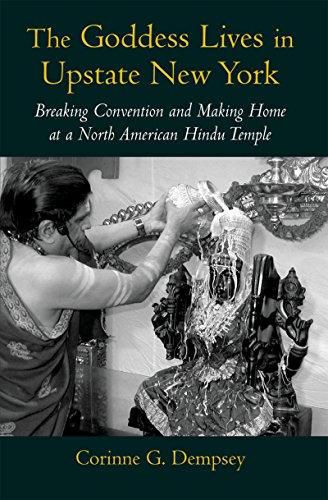
By Corinne G. Dempsey
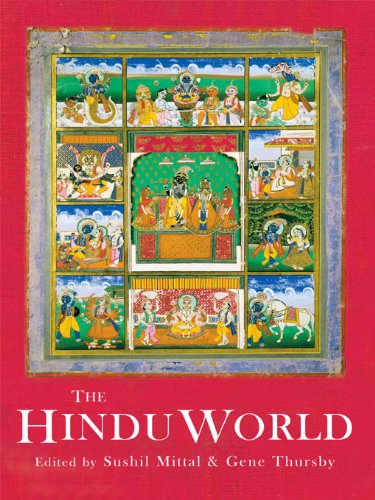
By Sushil Mittal,Gene Thursby
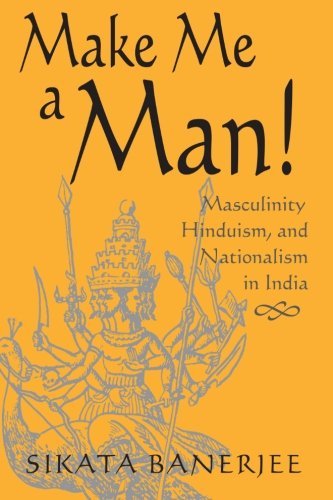
By Sikata Banerjee
Make Me a guy! argues that principles approximately manhood play a key position in construction and maintaining the trendy state. It examines a selected expression of kingdom and manliness: masculine Hinduism. This perfect, which emerged from India’s event of British imperialism, is characterised via martial prowess, muscular energy, ethical fortitude, and a readiness to visit conflict. Embodied within the photographs of the Hindu soldier and the warrior monk, masculine Hinduism is rooted in a inflexible “us as opposed to them” view of state that turns into implicated in violence and intolerance. Masculine Hinduism additionally has very important connotations for ladies, whose roles during this atmosphere encompass the heroic mom, chaste spouse, and celibate, masculinized warrior. All of those roles shore up the “us as opposed to them” dichotomy and constrict women’s lives through enforcing specific norms and inspiring limits on women’s freedom.
Sikata Banerjee notes that the nationalism outlined via masculine Hinduism attracts on a extra basic narrative of kingdom present in many cultures. If the results of this narrative are to be resisted, the common sense of masculinity, armed manhood, and state must be tested in varied contexts.
Sikata Banerjee is affiliate Professor of Women’s reviews on the college of Victoria and the writer of Warriors in Politics: Hindu Nationalism, Violence, and the Shiv Sena in India.
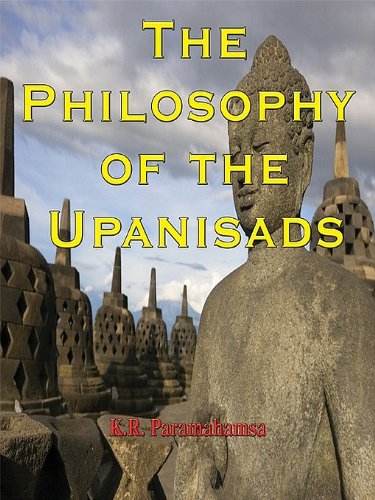
By K.R. Paramahamsa
The ontological enquiry of the ‘Beingness’ is the center of the Vedantic process of inspiration. The Vedantic procedure includes the Upanisads, the Brahma-sutras (Vedanta aphorisms) and the Bhagavad-Gita. The Vedanta Aphorisms are back in response to the basic content material of the Upanisads. The Bhagavad-Gita additionally comprises the essence of the philosophical teachings of the Upanisads. therefore the Upanisads represent the fundamental constitution on which the ontological enquiry of the Being and the truth relies. the entire Vedantins retain that there's a vital harmony threading the Upanisads jointly.
The Upanisads frequently objective at explaining the character of the Atman. because of this the Upanisadic philosophy is expounded to be ‘Atman’ established. Their instructing is in response to the a lot later instructing of Socrates, ‘Know thyself’.